Welcome to Mainz Cathedral
“This cathedral above the Rhine Valley would have remained etched in my memory in all its power and grandeur, even if I had never seen it again,” wrote the writer Anna Seghers.
Even a millennium after its construction, the Mainz Cathedral significantly shapes the cityscape and history of Mainz. At the intersection of important trade and transportation routes, the city developed, thanks to the activities of Saint Boniface from 746/47, into the ecclesiastical center north of the Alps and was granted the honorary title "Holy See" under Archbishop Willigis (975–1011).
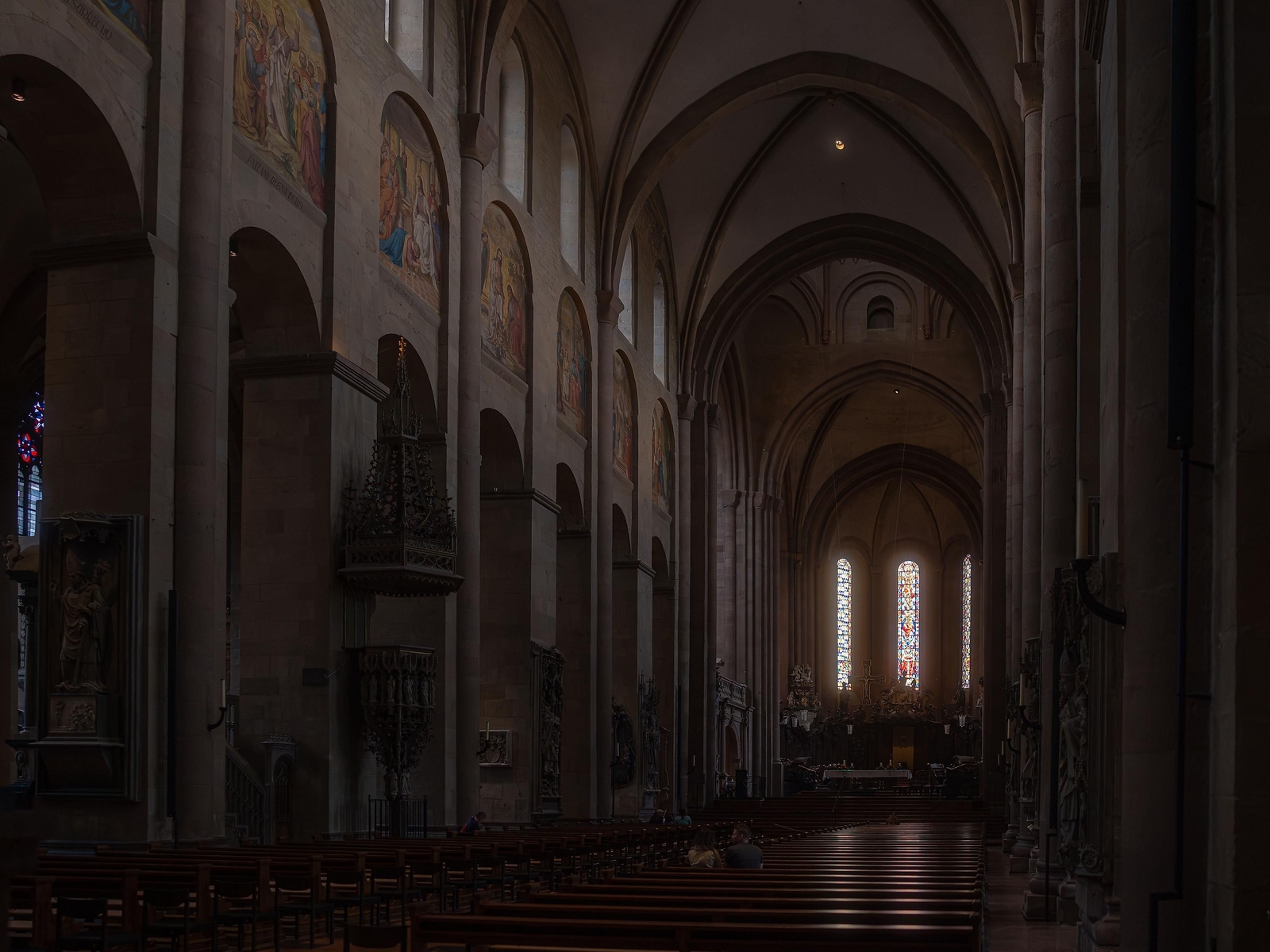
Willigis, who was both Archbishop of Mainz and Chancellor of the German Empire, had the cathedral built in 975 after the model of St. Peter in Rome. Over the centuries, seven royal coronations took place here. However, the first cathedral was destroyed by fire on the day of its consecration in 1009 and could only be used again in 1036. Therefore, Willigis himself found his final resting place in St. Stephen’s. The bronze doors of the market portal – the oldest preserved decorative piece of the cathedral – date back to his tenure and feature an inscription naming both the builder and the artist. The cathedral has three naves, two choirs, and numerous chapels; the west choir is dedicated to Saint Martin, and the east choir to Saint Stephen.
To this day, the cathedral is surrounded by a historically grown ensemble of ancillary buildings, the so-called "Cathedral Mountain" made of red sandstone. A striking contrast is formed by the Romanesque Gotthard Chapel made of light stone, which Archbishop Adalbert had built before 1137 as a private chapel, and which houses a crucifix from the Staufen period. In 1778/79, the cathedral houses with fireproof stone roofs were constructed on the graveyard according to plans by Ignaz Michael Neumann – a reaction to the numerous fires that plagued the cathedral throughout the centuries. After a lightning strike, the western crossing tower received a new stone spire in 1767.
The east choir, with its over two-meter-thick walls, is the oldest part of the cathedral. Its crossing tower was damaged in 1793 during the bombardment of Mainz and rebuilt in the 19th century. Below the east choir, a crypt from the 11th century was later discovered. The late Romanesque west choir was built between 1200 and 1239 and received a Gothic bell chamber in the 15th century. The Rococo choir stalls from 1767 were saved from destruction by Bishop Joseph Ludwig Colmar; he is also credited with ensuring that the cathedral was not demolished after secularization in 1803.
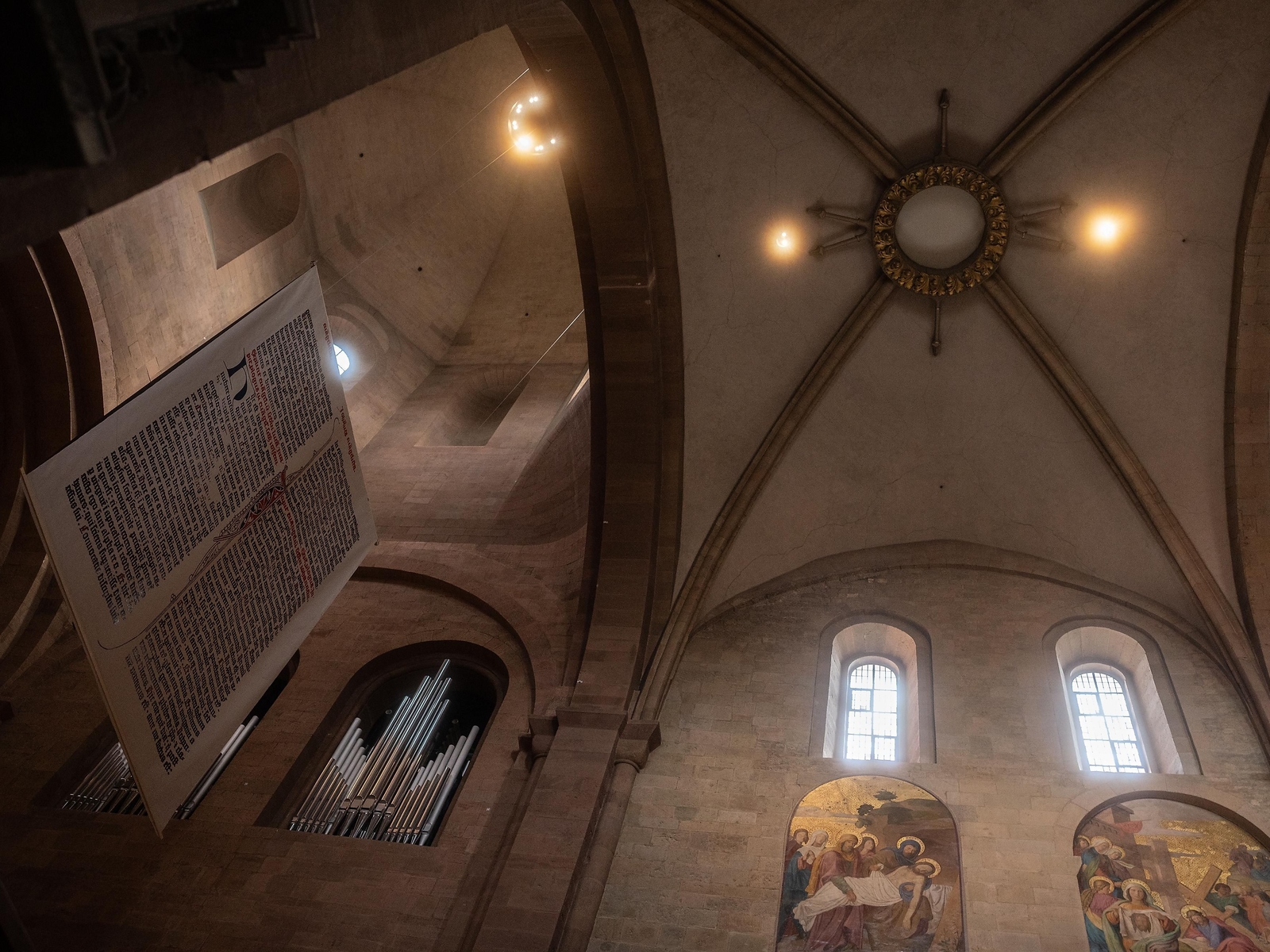
Since 1928, bishops have been buried in the crypt under the west choir. In total, 45 of the 84 Mainz bishops and archbishops rest in the cathedral. Numerous memorials from the 11th to the 20th centuries adorn the pillars, walls, and cloisters and create an impressive portrait gallery of the diocese's history. Wall and stained-glass paintings from earlier centuries are no longer preserved; the current murals in the nave date back to the 19th century.
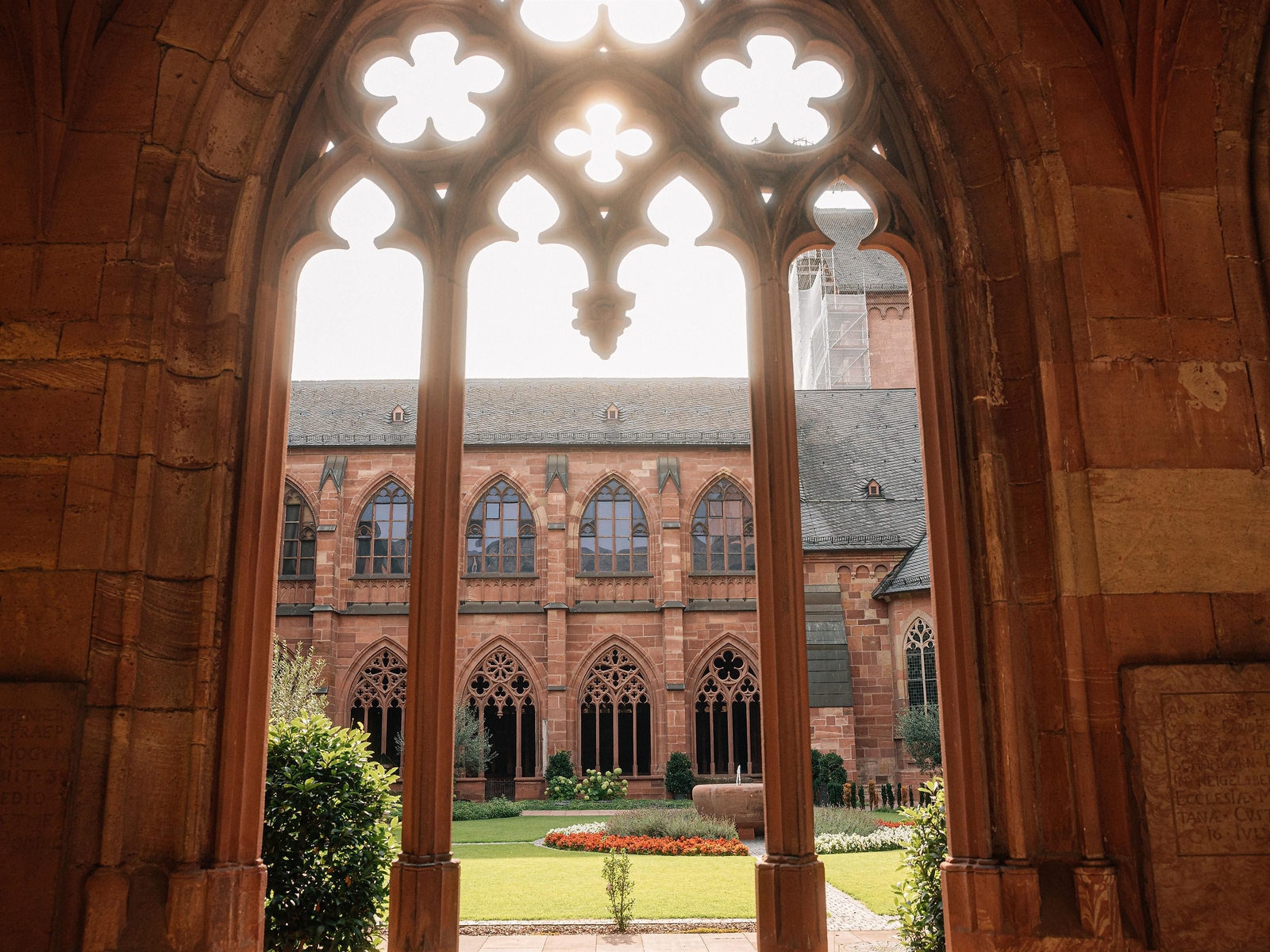
Special attractions include the Mary altar in the Ketteler Chapel with the late Gothic figure group of the "beautiful Mainz woman," as well as the two-story cloister from the 15th century. In the former capitular buildings, the Episcopal Cathedral and Diocesan Museum is today housed, exhibiting precious works of religious art from the late Middle Ages and modern times.
The cathedral is accessible to people with disabilities; the cloister can be reached via a ramp, and a disabled-accessible toilet is available.
Source: DataHub Rheinland-Pfalz