Welcome to
The musical events at Christuskirche Karlsruhe under the direction of cantor Peter Gortner, organist Carsten Wiebusch, and the Christuskirche team are presented here.
Various ensembles come together at Christuskirche Karlsruhe: the Christuskirche Chamber Choir, the Karlsruhe Oratorio Choir at Christuskirche, Capella Carlsruhe, the Christuskirche Karlsruhe Wind Ensemble, and the Cantus Juvenum Karlsruhe e.V. singing school (whose girls' choirs are affiliated with Christuskirche).
A new old organ: The large Klais organ, which is of national importance, was renovated and expanded in 2010. The organ at Christuskirche Karlsruhe, built by Philipp Klais, has received international attention since its inauguration in 2010. It is the innovative design that makes the organ so significant: the tonal core of the instrument is the old Klais organ from 1966, built by Hans-Gerd Klais, whose registers (a total of approx. 4000 pipes) were almost completely incorporated into the new organ without changing their sound in the slightest or removing them from their original context.
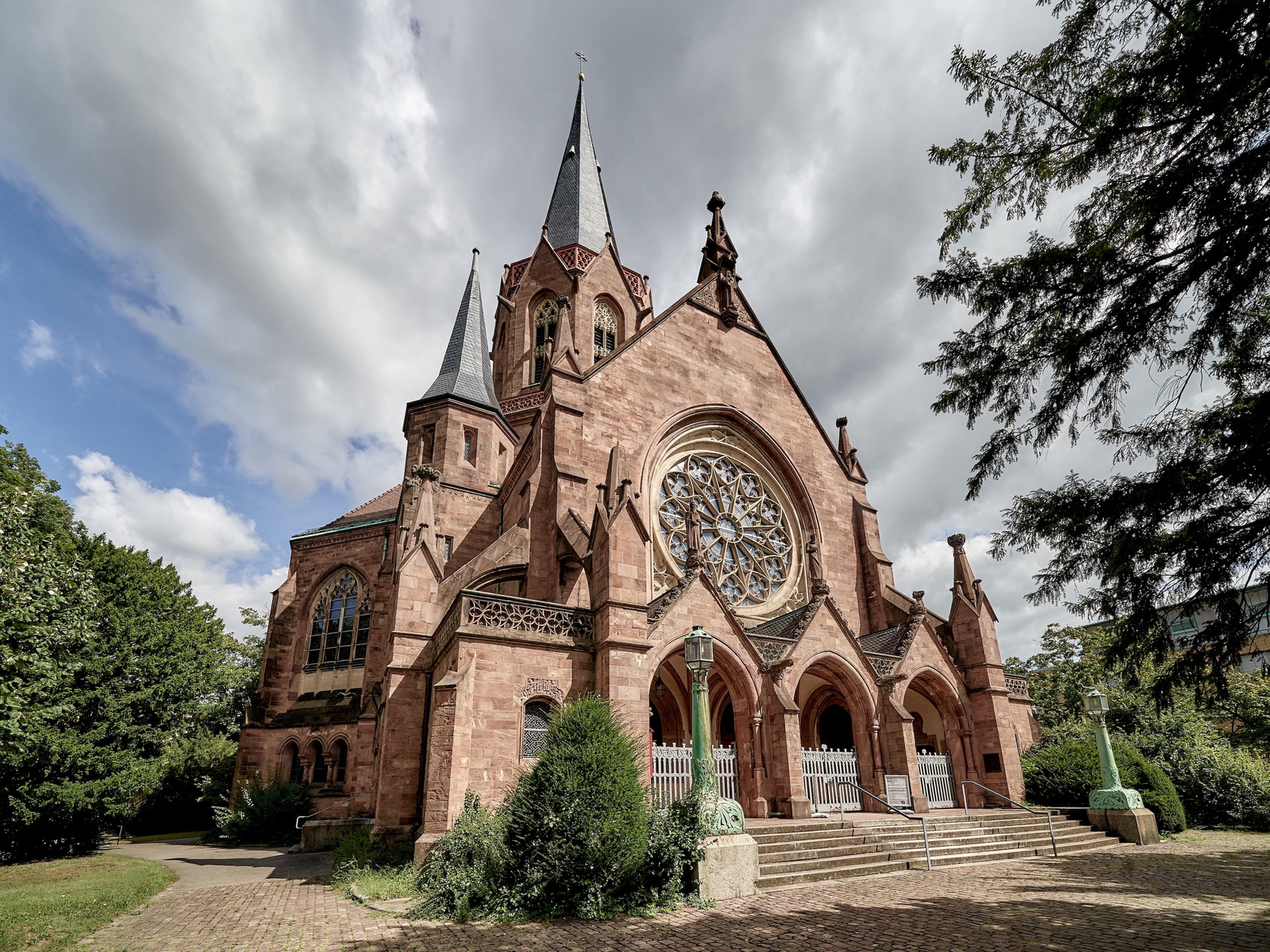
The Protestant Christuskirche in Karlsruhe was built between 1896 and 1900 at the Mühlburger Tor according to the design of architects Robert Curjel and Karl Moser.
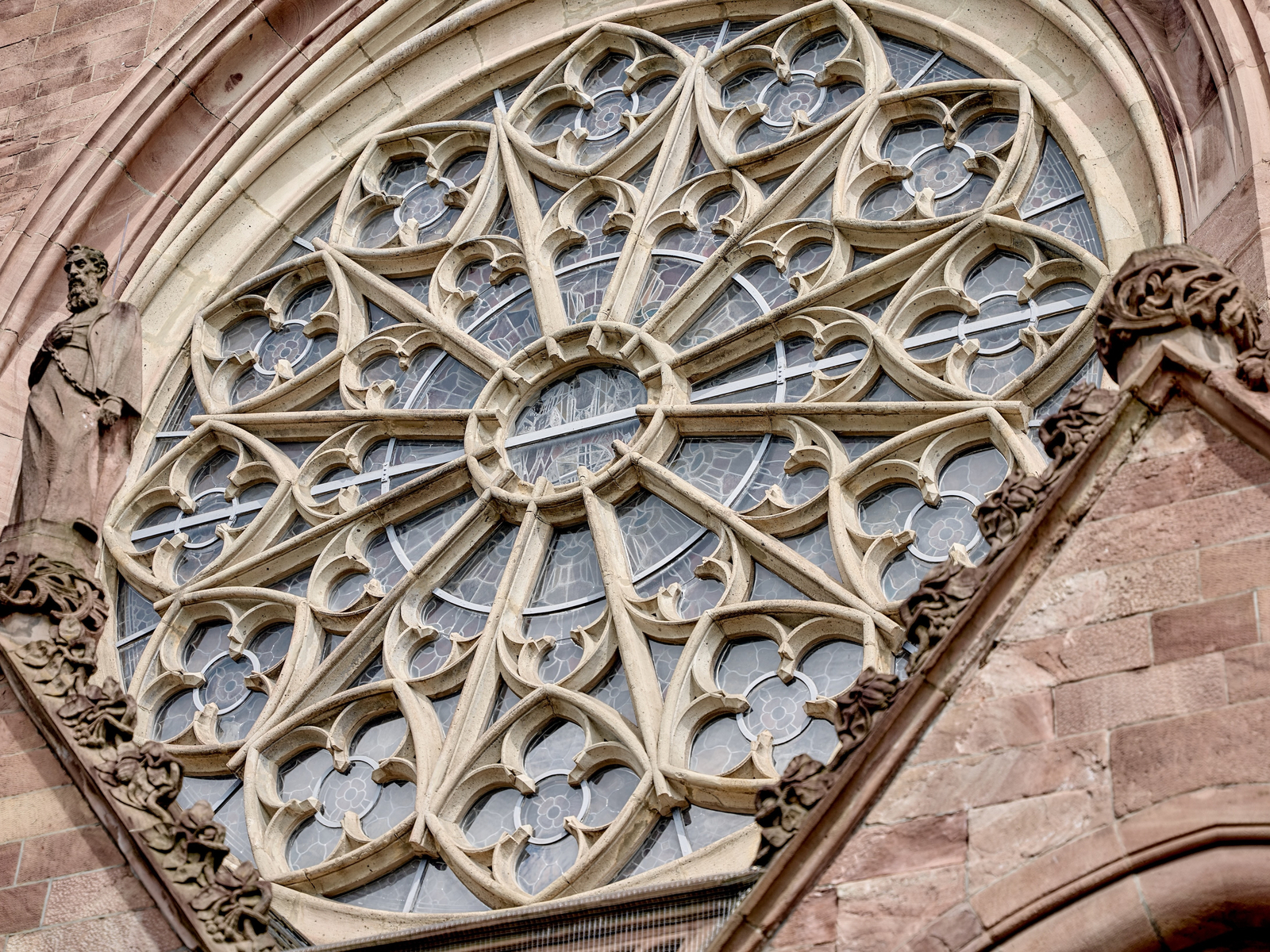
The church building itself, with its successful neo-Gothic elements, is a special example of historicism. At the same time, however, individual elements of the church's furnishings, such as the lights erected in front of the church and, above all, the design of the rectory to the north, are examples of Curjel and Moser's intensive engagement with Art Nouveau.
Consecrated in 1900, the church is also a prominent example of the "Wiesbaden Program," which radically changed traditional church architecture and favored central buildings in particular.
Source: DZT Knowledge Graph