Welcome to Dom zu Bardowick
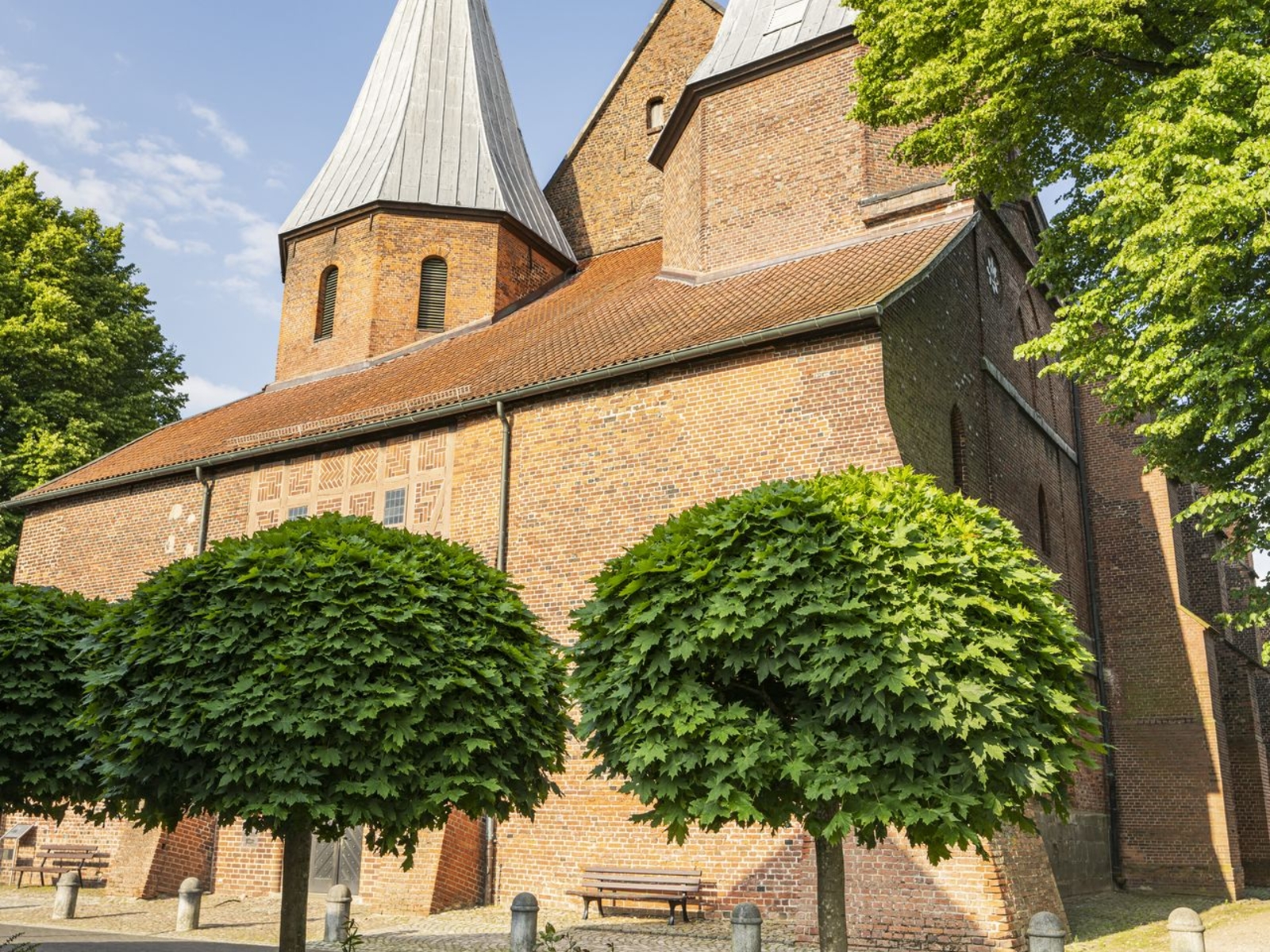
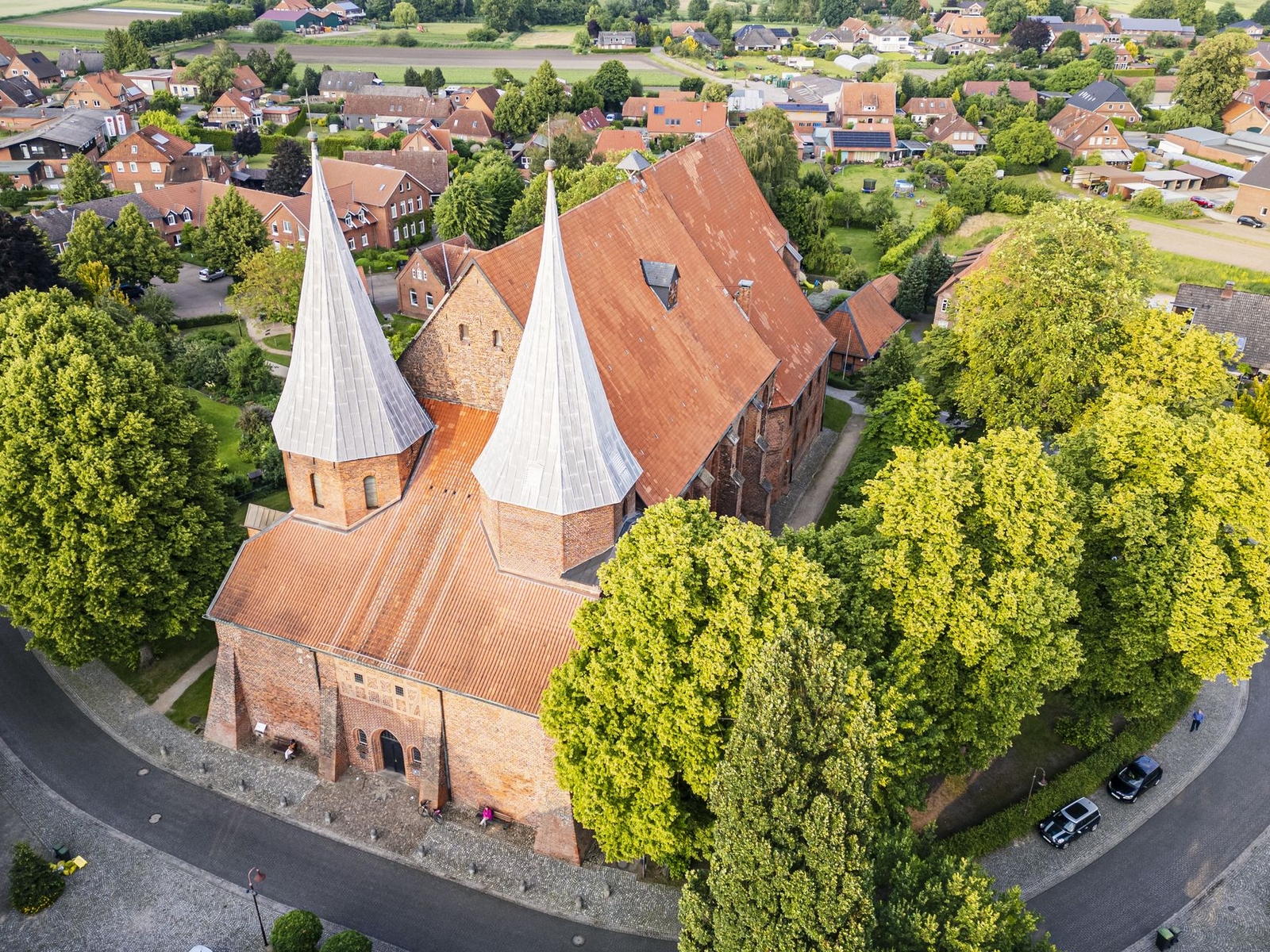
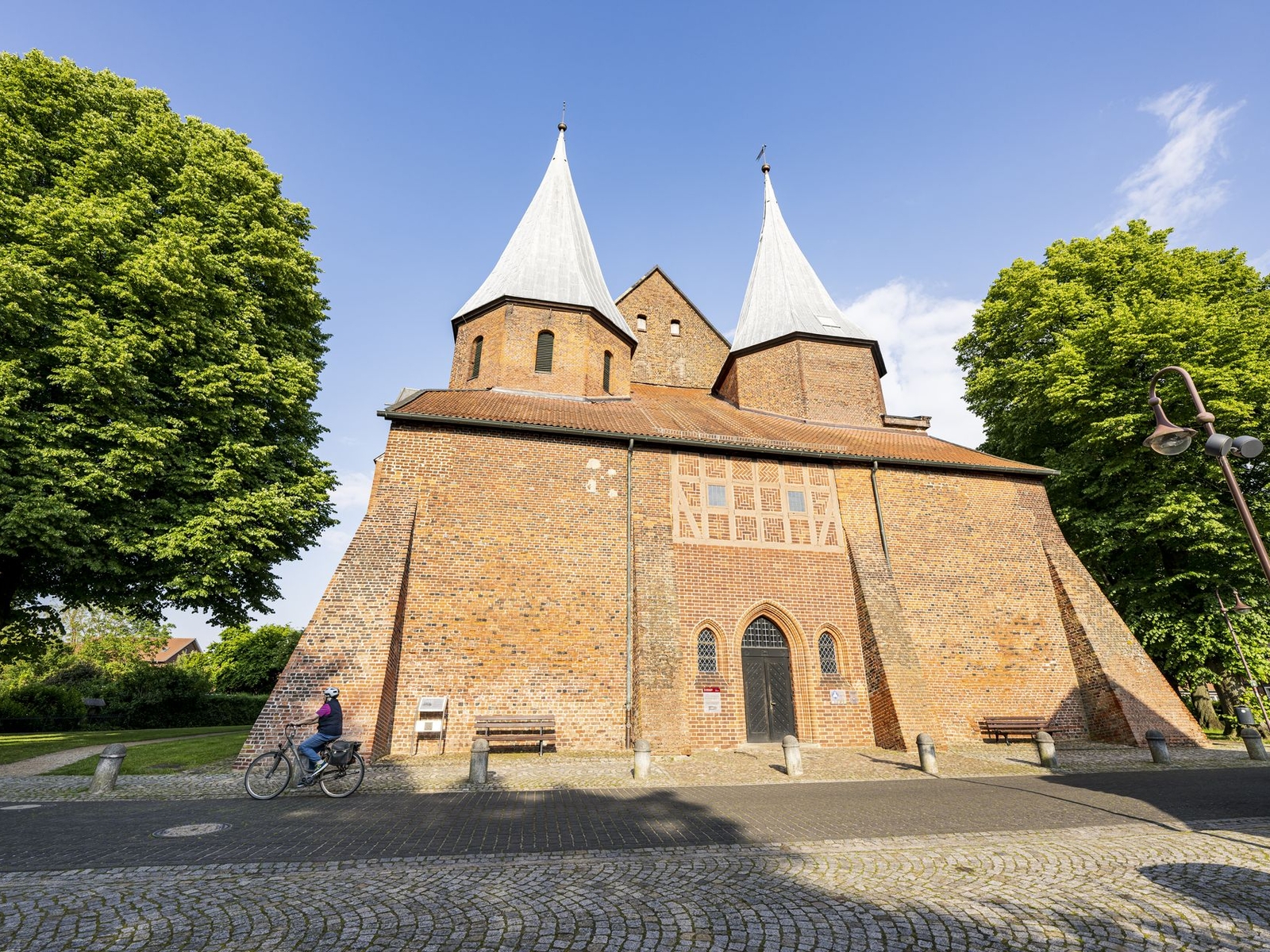
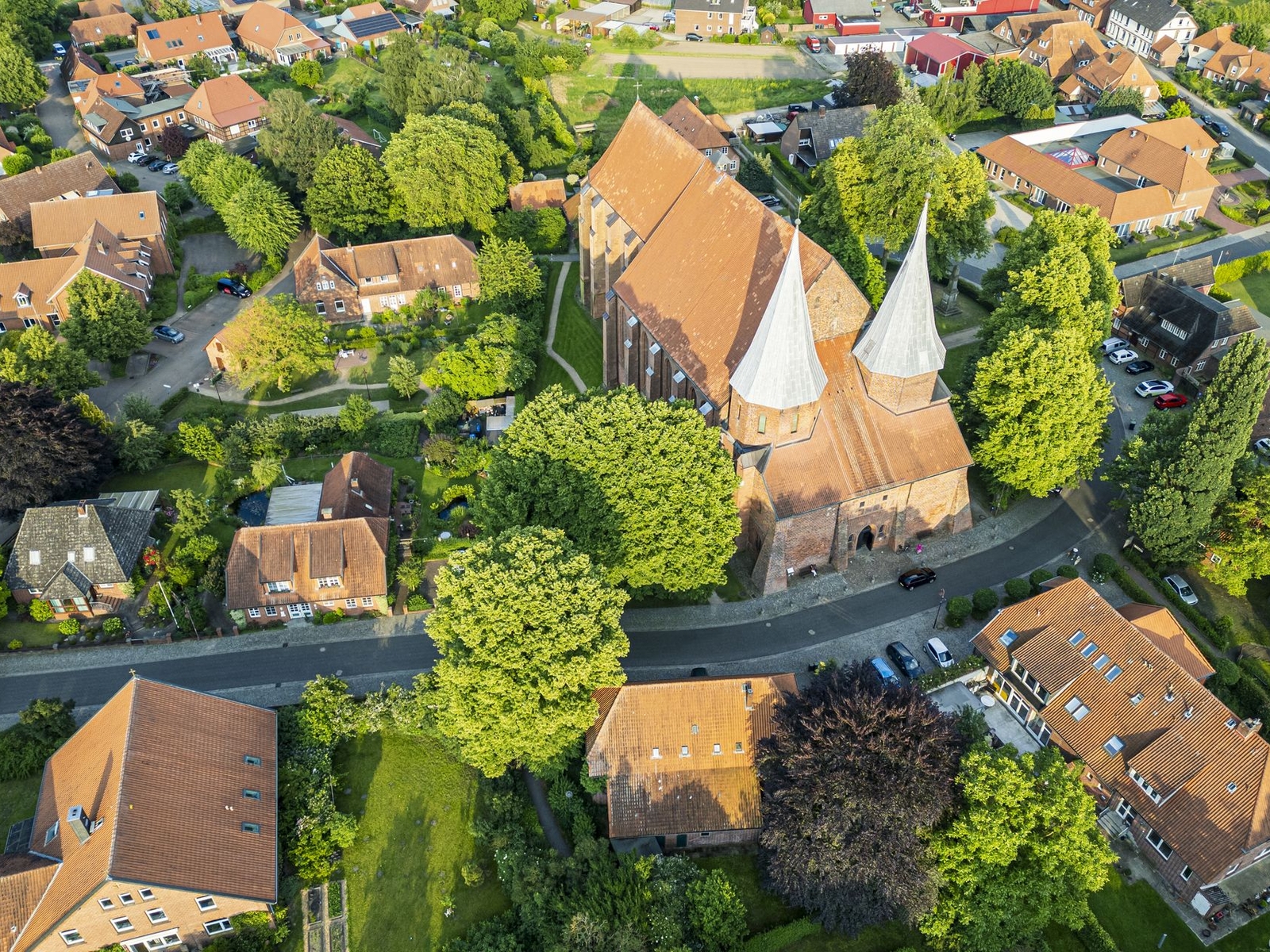
Built between 1389 and 1485, this three-nave hall church stands out with its two massive octagonal brick towers.
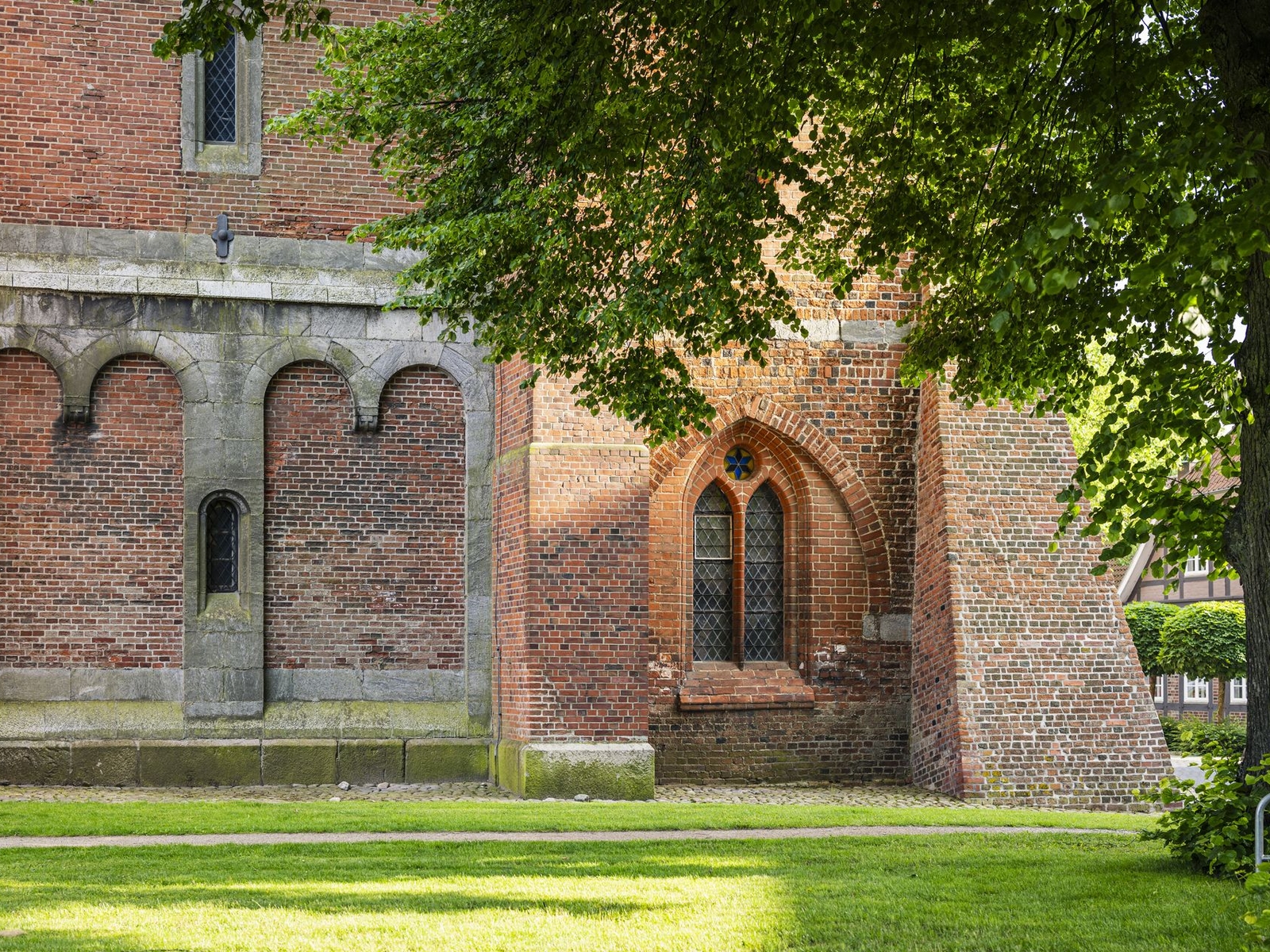
Originally founded as a collegiate church, it belonged to a missionary cell of the Amorbach monastery. After the destruction of Bardowick by Henry the Lion in 1189, the church, originally built of wood, suffered considerable damage, as documented by a papal document from 1194. Traces of the previous building can still be found in the western St Stephen's Chapel and the towers, where ashlars of Lüneburg Schiltstein, a stone containing gypsum, were used. The Romanesque portal, protected by the chapel in front, is also made of this stone.
Bills of sale from 1236 and around 1300 document the raising of funds for the new building on the old site. The financing was secured from 1381 by a chapter resolution of the monastery and further letters of indulgence.
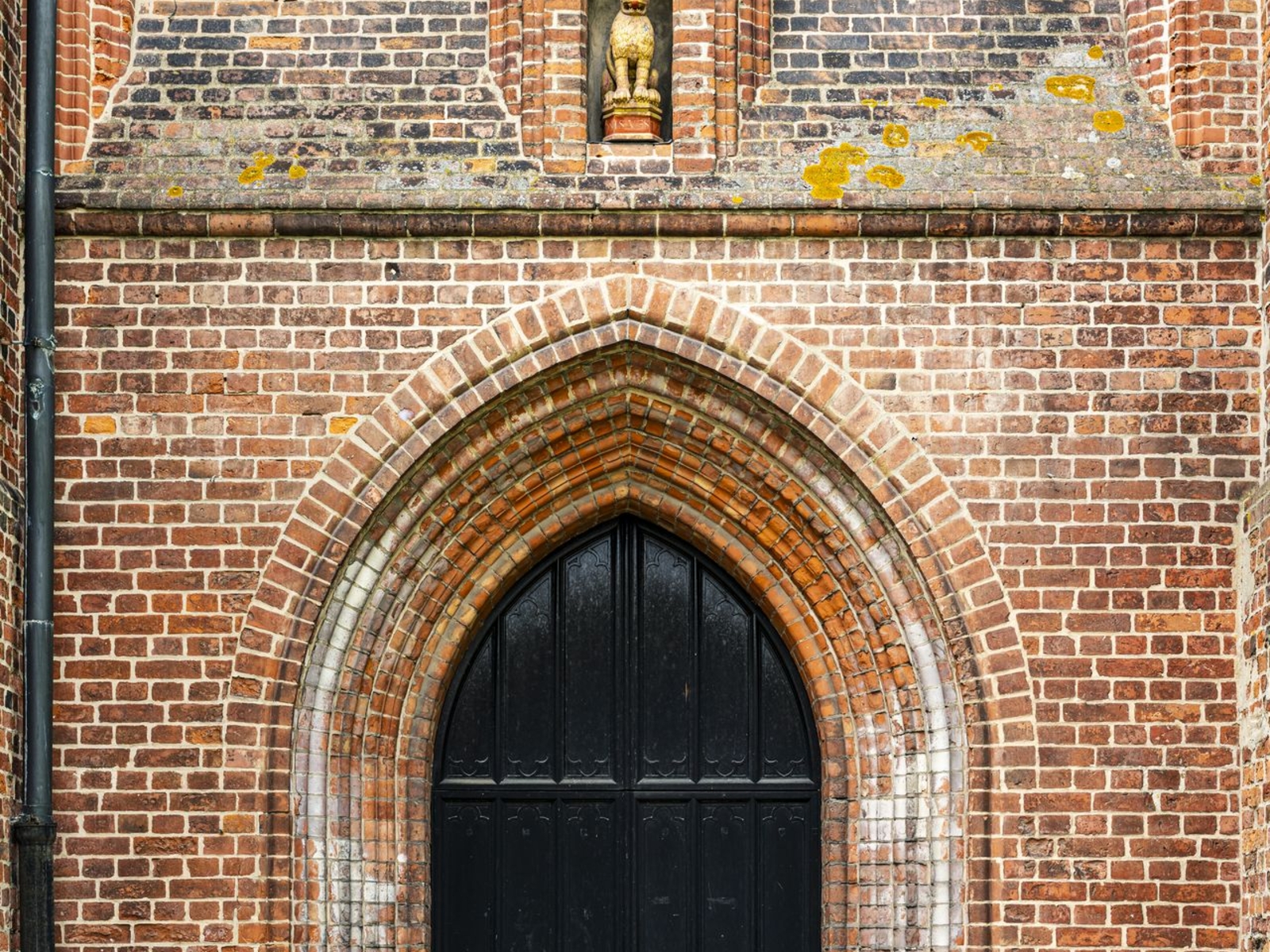
The two towers were already built from bricks around 1300, but they are unusually low for a church of this size. Construction of the choir began in 1389 and extends over a length of 28 metres and a width of 12.80 metres. The roof truss dates from 1405 and 1428 and the choir stalls were added in 1487. The vestibule in front of the south portal, which once existed, has since been demolished, but the wooden sculpture of a seated lion above the south portal, decorated with a gilded lead coat and the inscription "Vestigium Leonis", has been preserved.
Source: DZT Knowledge Graph