Welcome to
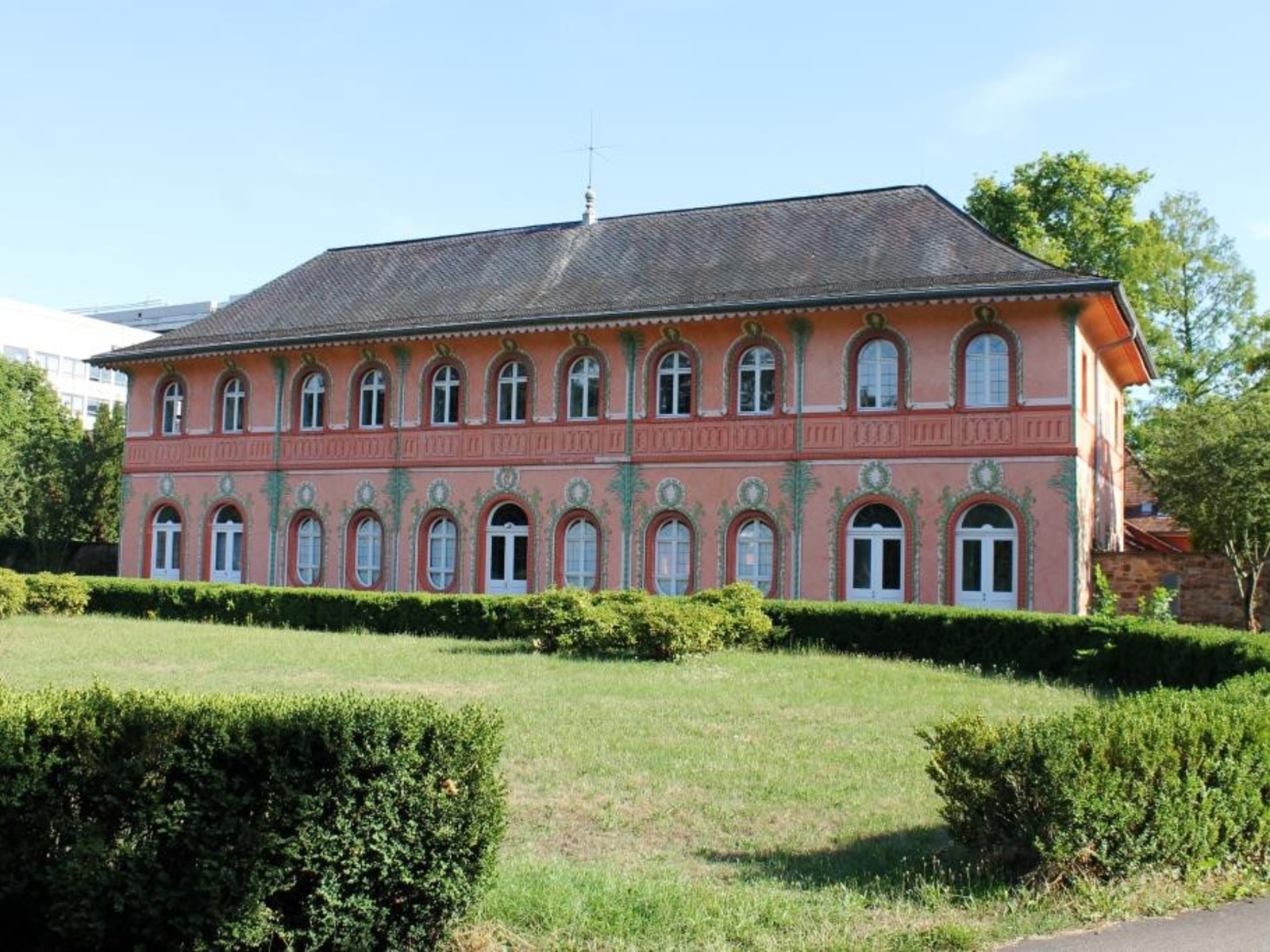
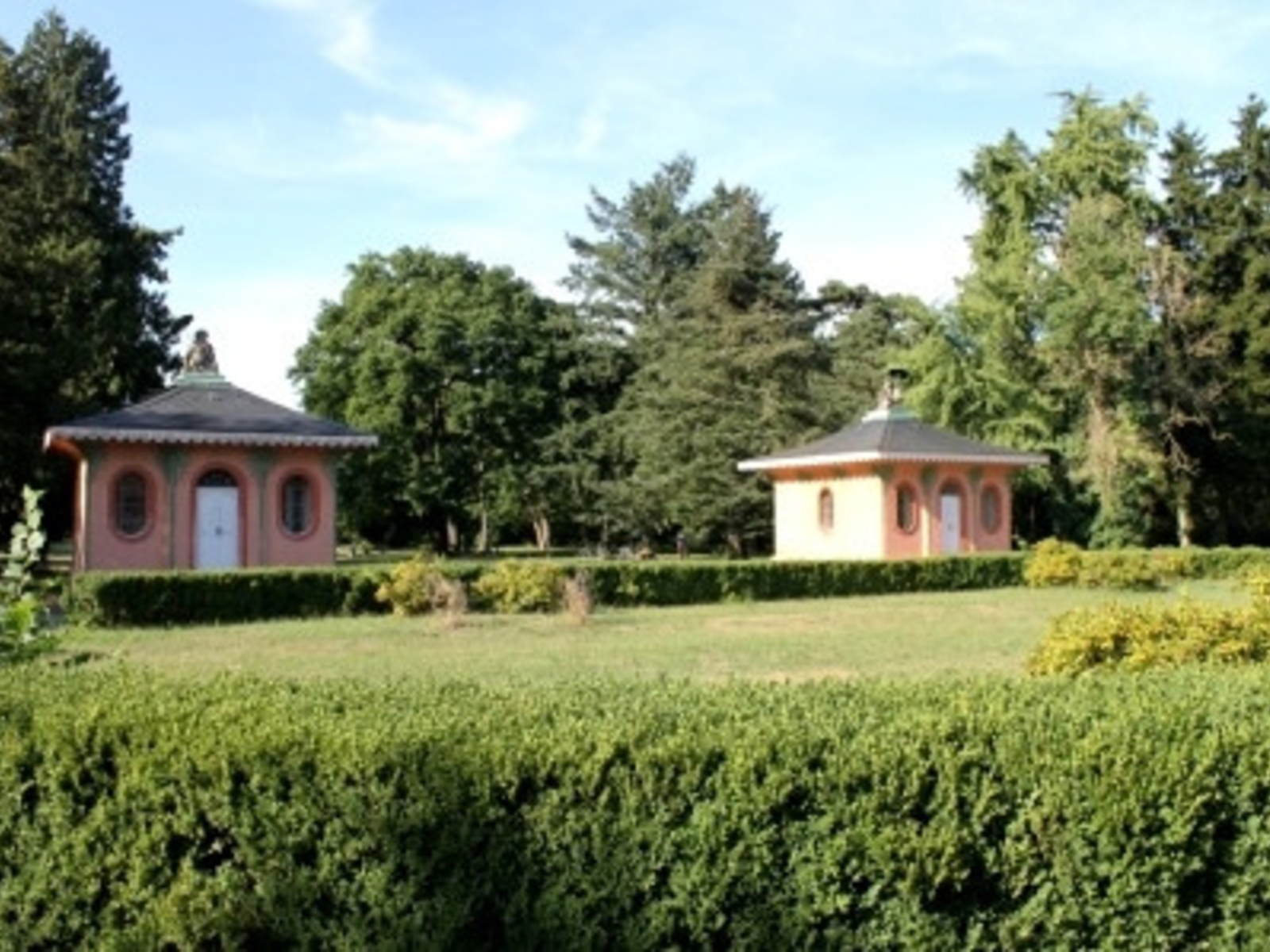
In 1765, the **Fasanenschlösschen** (pheasant castle) was built under Margrave Karl-Friedrich on the edge of the "Bocksblöße" forest clearing, east of the castle tower. It is a Chinese-style pleasure and tea house with two opposing pavilions.
The Fasanenschlösschen was **originally used for breeding pheasants**. The pheasant rooms were located on the ground floor of the castle, while the pheasant master's apartment was on the upper floor. When the castle garden was redesigned as an English landscape garden in 1773, the building was also converted into a small castle. The pheasant rooms were converted into a **representative hall**, which still largely retains its original furnishings with sea-green wall paint and classic elements.
When the pheasantry, which at times housed more than 3,000 pheasants, was dissolved in 1866, the hall in the small castle served as a **prince's school** during the summer months and was used as an **officers' hospital** during the war of 1870/1871. The Chinese pavilions were **small tea houses** and later study rooms for the children of the princely court. Since 1926, it has been the **seat of the Karlsruhe State Forestry School**, and since 1990, it has also been the educational center of the state forestry administration.
Source: DZT Knowledge Graph