Hochburg Emmendingen
Sights
Hochburg Emmendingen
Sights
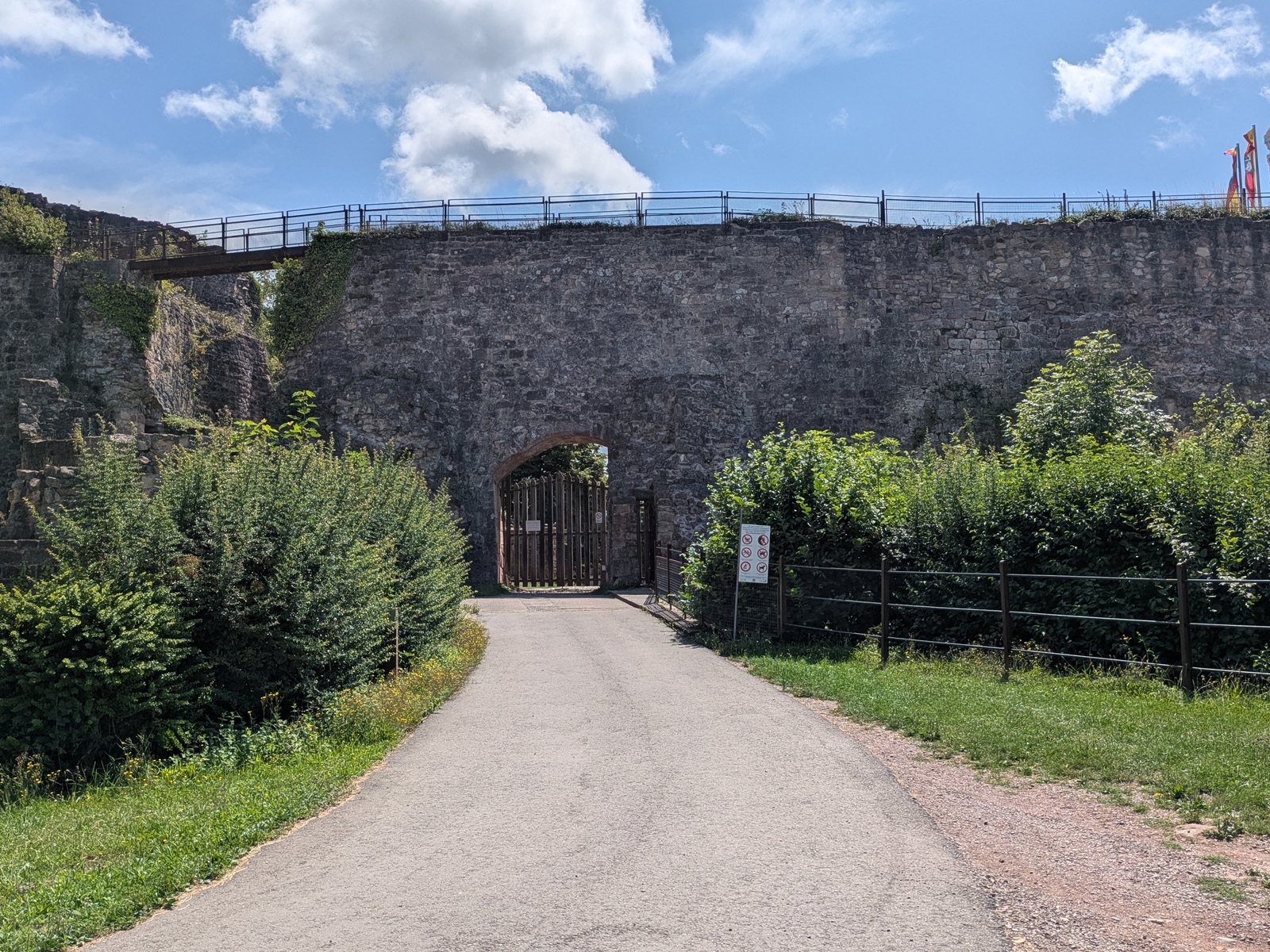
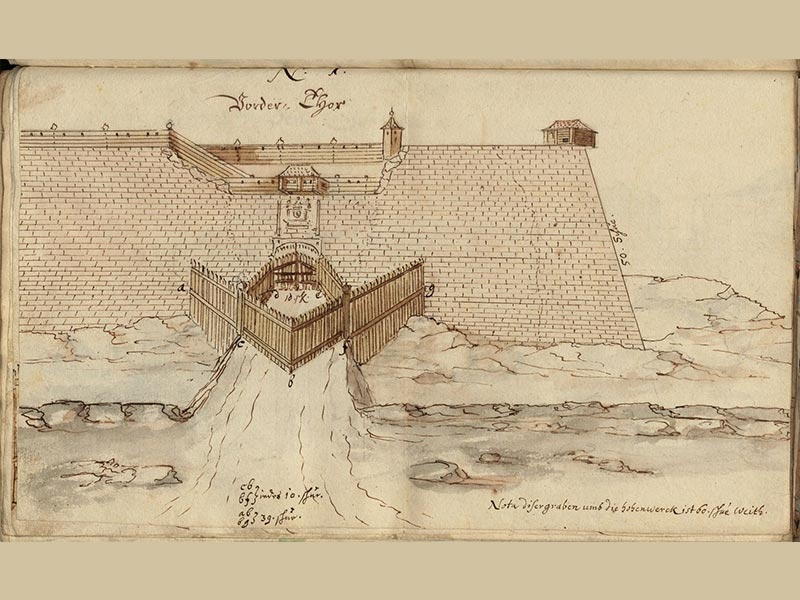
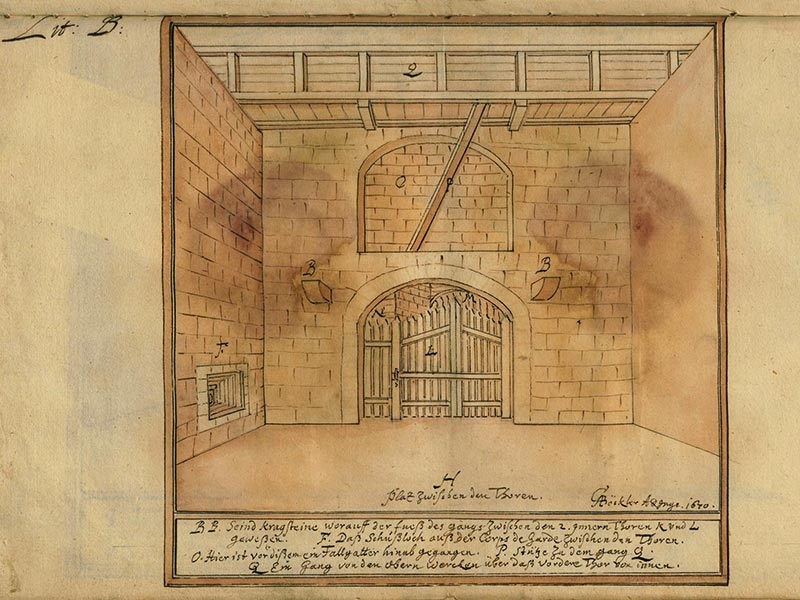
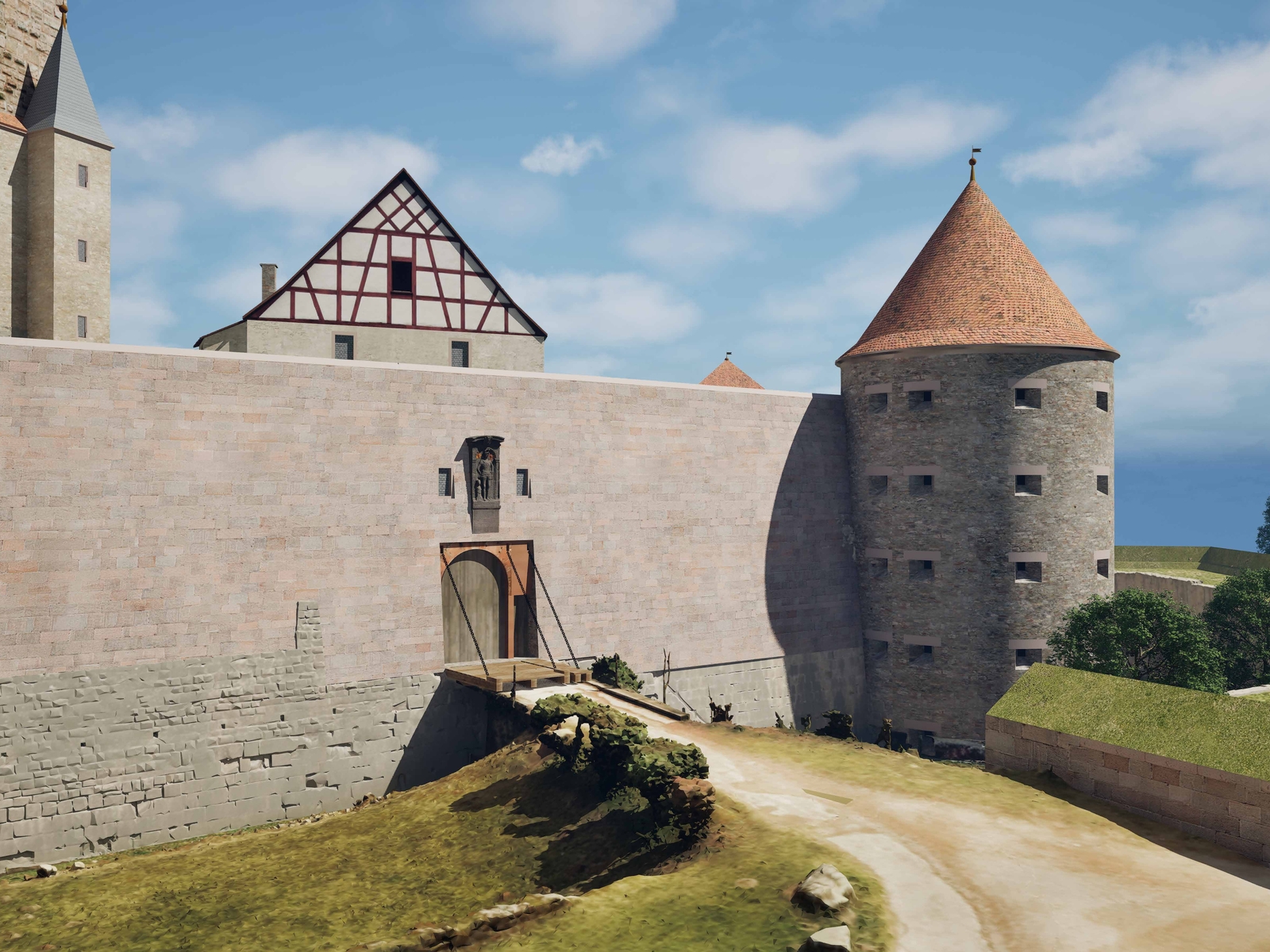
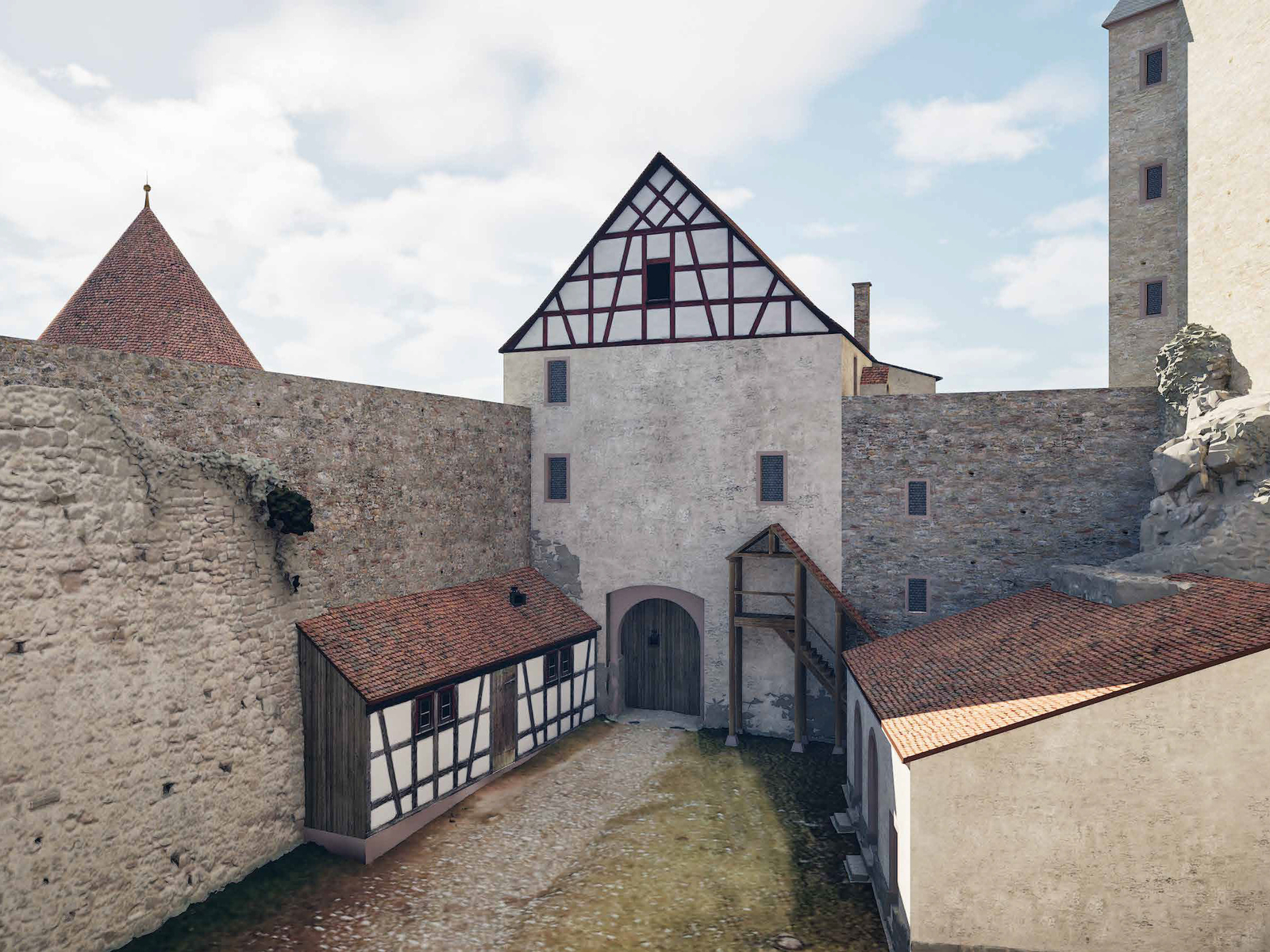
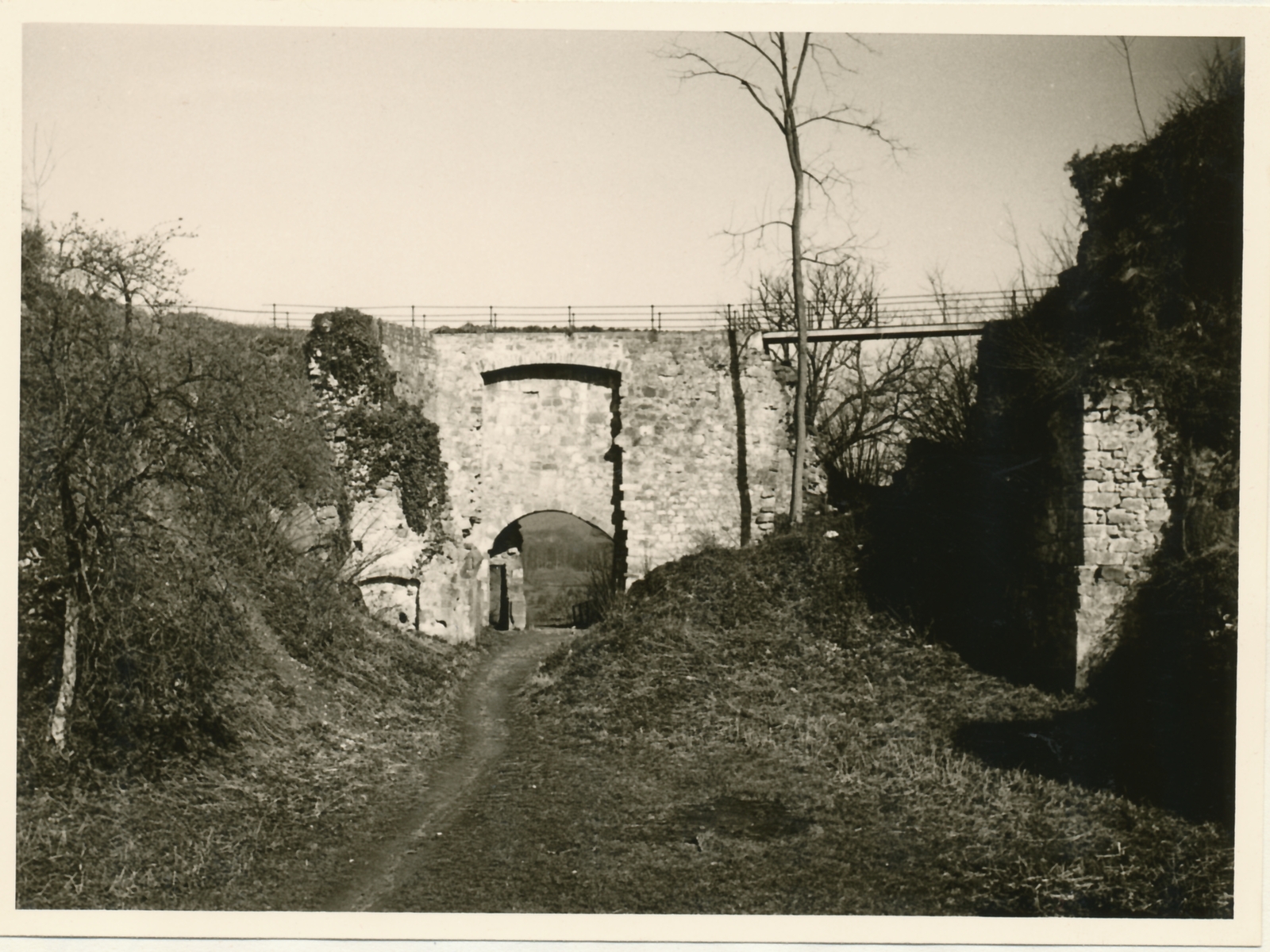
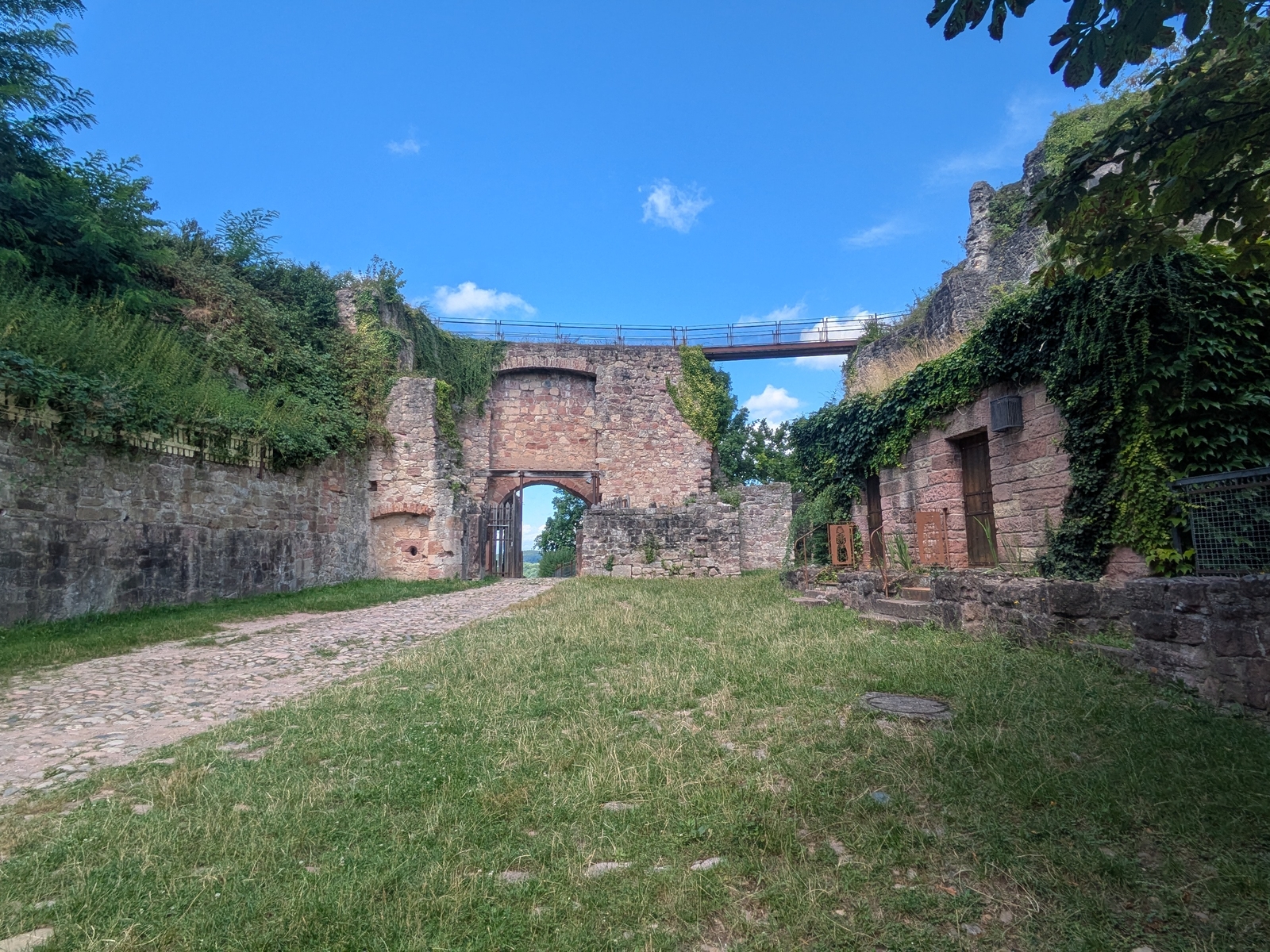
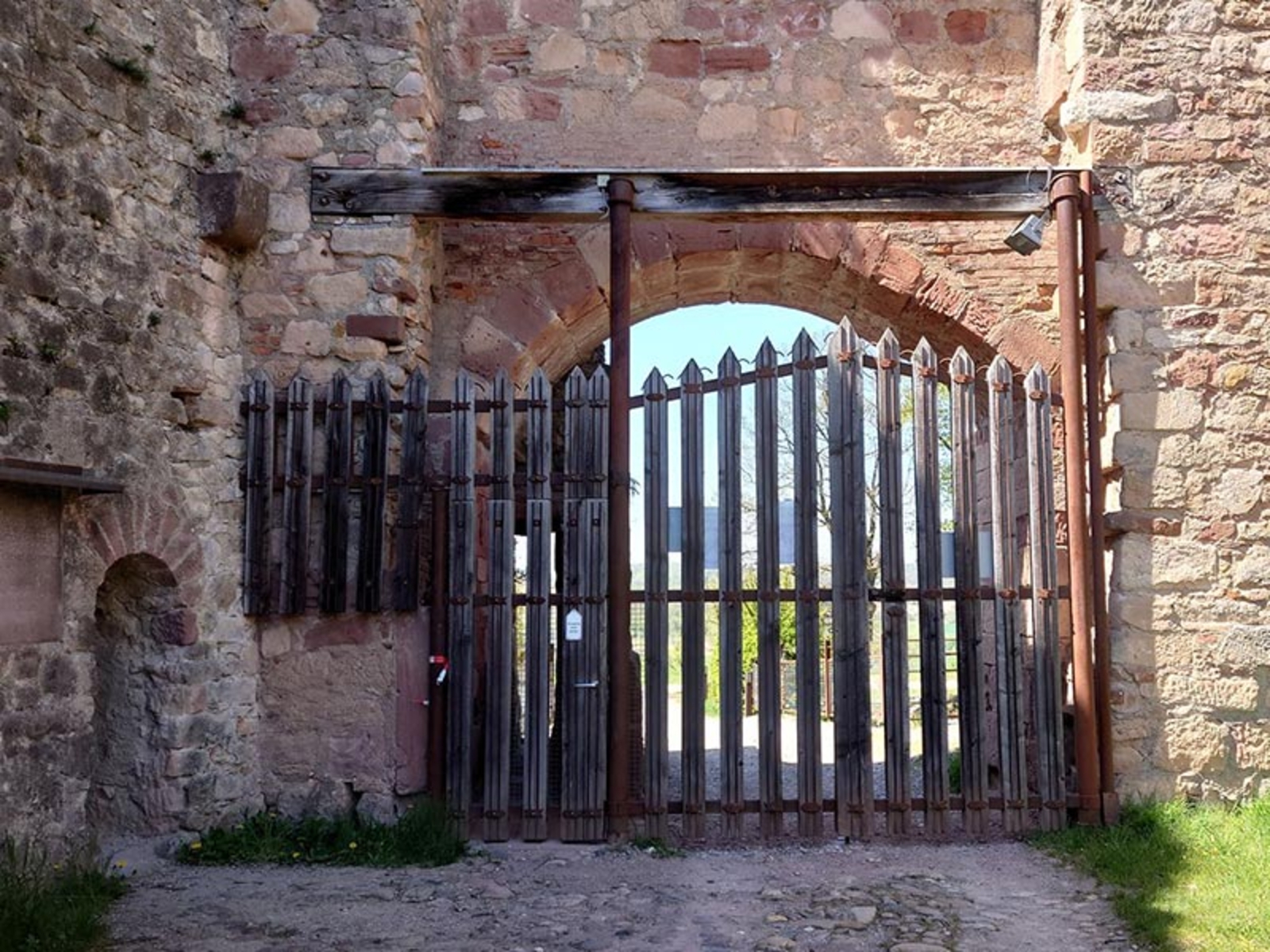
The main gate has closed off access to the castle since the beginning of the 16th century. Over the years, it has been variously extended and converted for defensive reasons. The 15th-century half tower to the north was added as a gate guard so that the interior of the gate could be fired at through the embrasures. When the gate was closed and the drawbridge up, people could use the ‘manhole’ to the side, one at a time.
The current castle gate can be seen in the plans drawn up by architect Georg Andreas Böckler in 1670. One of his briefs was to rebuild the castle after the Thirty Years' War. His plans and sketches are now housed in the General State Archive in Karlsruhe.
If you stand on the old drawbridge and look south, you can see the coach house yard, which contains the remains of a round defensive tower. To the south, the coach house yard borders on the ‘New Fortification’. This was a later reinforcement of the fortress complex towards the Hornwald forest.
A castle code dating back to 1550 contains the following:
“The gate guard, porter:
The porter does not move from his station by the gate, he keeps it and the little manhole closed and lets no strangers in without questioning and no late-comers in without an explanation. In the mornings and evenings, he checks the crowd of servants going in and out to make sure no-one creeps through the gate unbidden. Anyone who dares is captured and taken to the governor.
During the night, and during church services and mealtimes, he gives his keys to the sergeant or cellarer who presents them to the governor. The porter ensures that nobody takes food or drink out through the gate. Any offenders are stopped, stripped of their goods and reported to the governor. If he fails in his task, he is punished.
When there are manservants in the castle and bread is sent to them, he records all of their names in a list.
His job prohibits him from drunken revelry in the porter’s lodge (gate guard).
The same applies to coopers, bakers, etc.”
Please accept cookies on this page to use the map feature.
Loading...
No locations found for this filter combination!
Scan the code to view this page on your smartphone or tablet.
We use cookies to provide you with the best possible browsing experience. Please note that when you accept only essential cookies, some of the website features may be unavailable or limited. You can find more information in our Privacy policy.