Overview
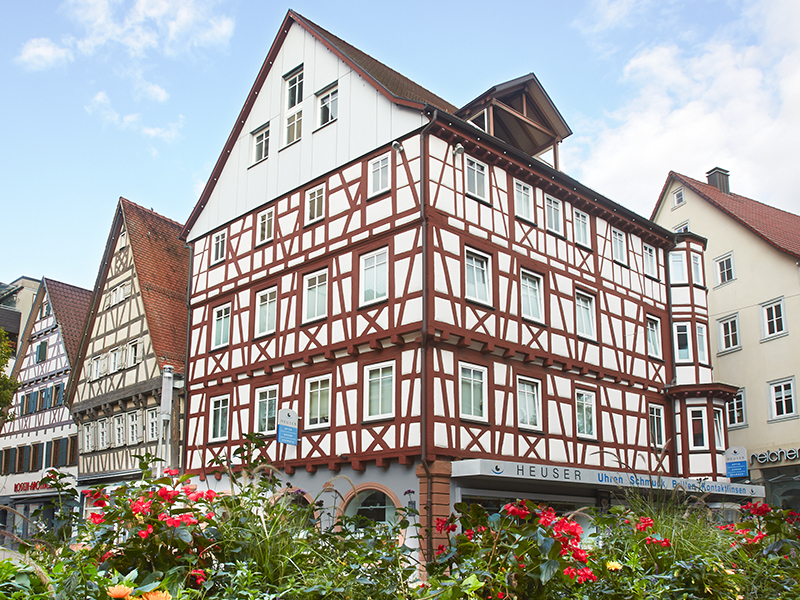
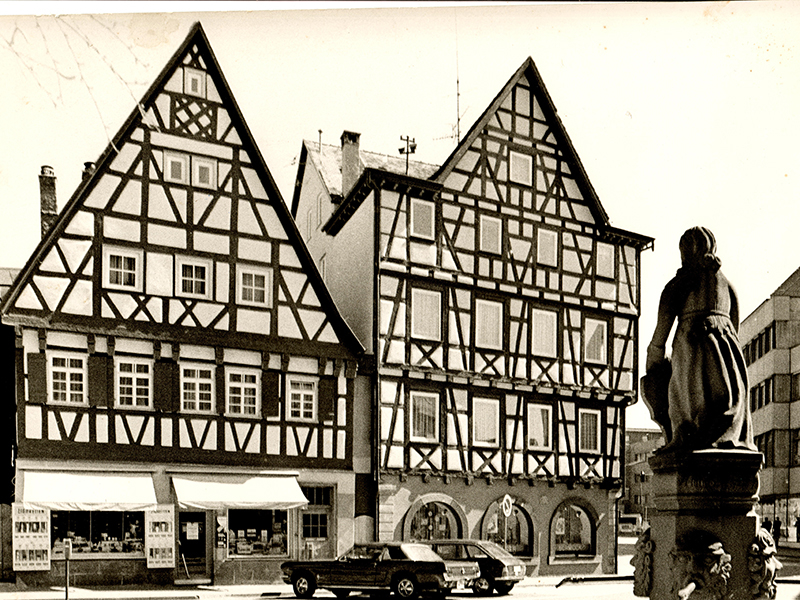
Johann Wolfgang Sautter, who was a confectioner and belonged to the family of clothmakers und mayors, commissioned the house in 1777. The bakery, store, supply room and office were on the ground floor.
Since their marriage in 1769, the Sautters had lived in a house on this lot. The back wall abutted against the medieval stone wall. Because the house was in very poor condition, the city urged Sautters to tear it down and replace it with a new one.
The façade on Turmstraße is the front of the house, which blends into the row of gabled houses. The keystone is part of the original structure from the 18th Century. It depicts an anchor, the builder’s initials and the year 1777 in a decorative frame or cartouche. The anchor symbolizes hope and faith, because an anchor promises stability and security, also in trade: the merchant’s anchor.
Johann Wolfgang Sautter’s great-granddaughter, Klara Sautter, was born in this house, as was her son Felix. Prof. Felix Schuster was a city builder, one of Nagold’s local historians and co-founder of the Swabian Heritage Society.