Alb bridge and Nepomuk statue
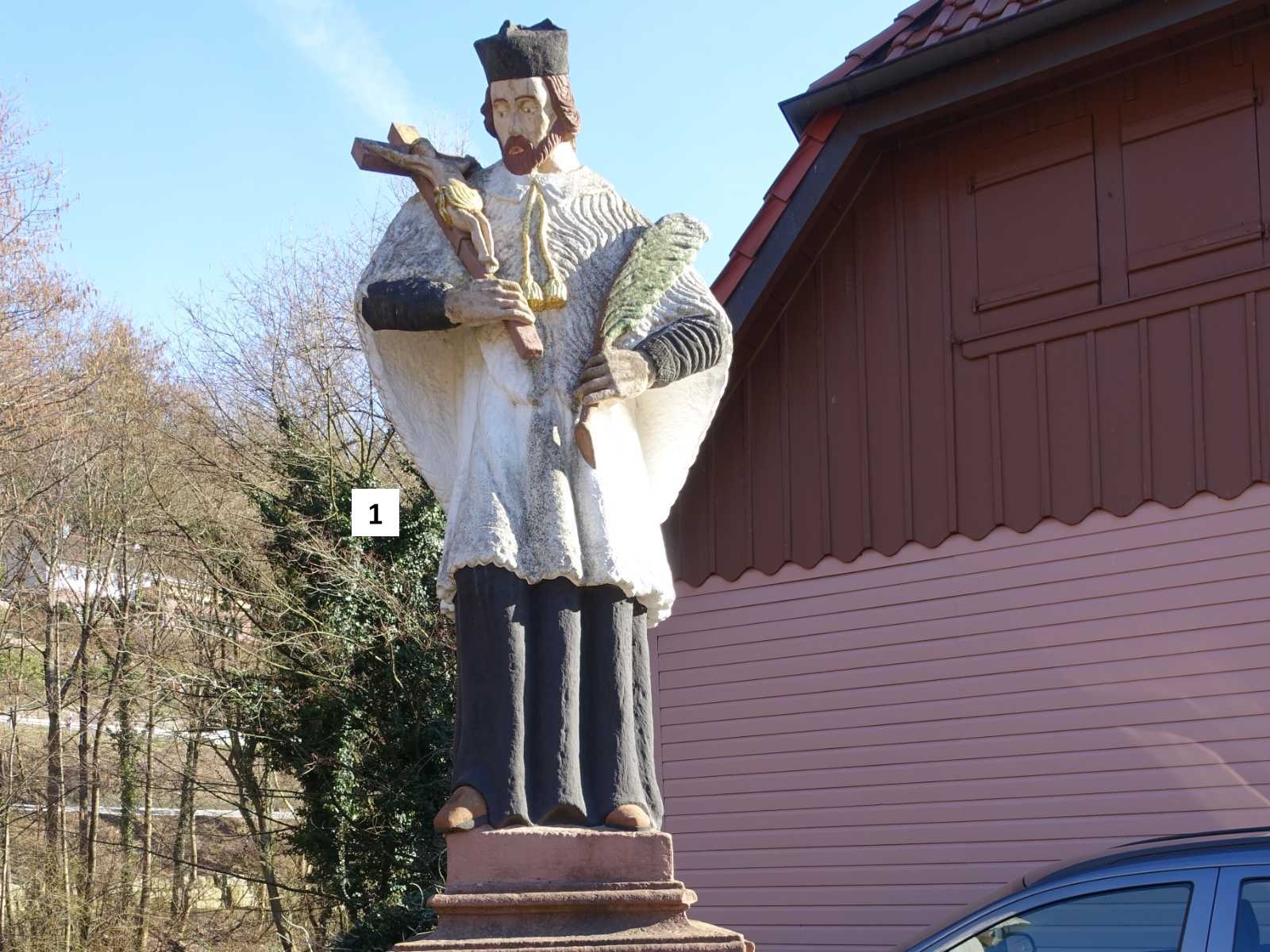
Who will discover the bridge over the Alb and who will find the Nepomuk statue?
GeoTour Marxzell
Historic buildings
Herrenalber Straße 2, 76359 Marxzell
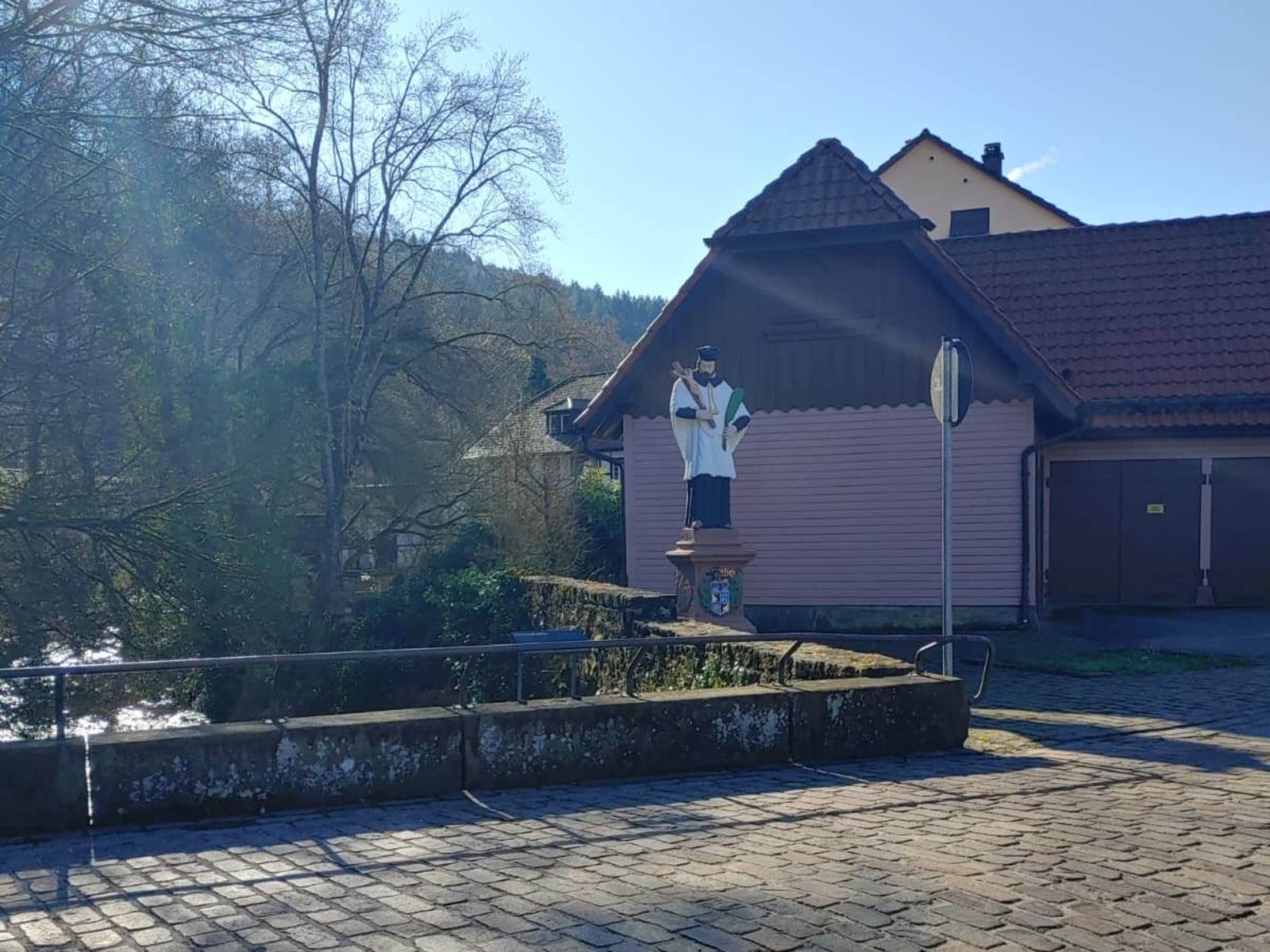
Why is there a statue of St. Nepomuk here of all places?
In the Catholic faith, St. Nepomuk is responsible for the protection of fords and bridges and for rafting, among other things. Attentive geo-hikers will often come across the coat of arms of Abbess Gertrude von Ichtratzheim, one of Frauenalb's most important "heads of state", between the inscription "F A" (probably for "Frauenalb") and the year "1725" ...
What rock is the statue made of?
It is a red sandstone without any inclusions, i.e. top-quality Baden building sandstone!
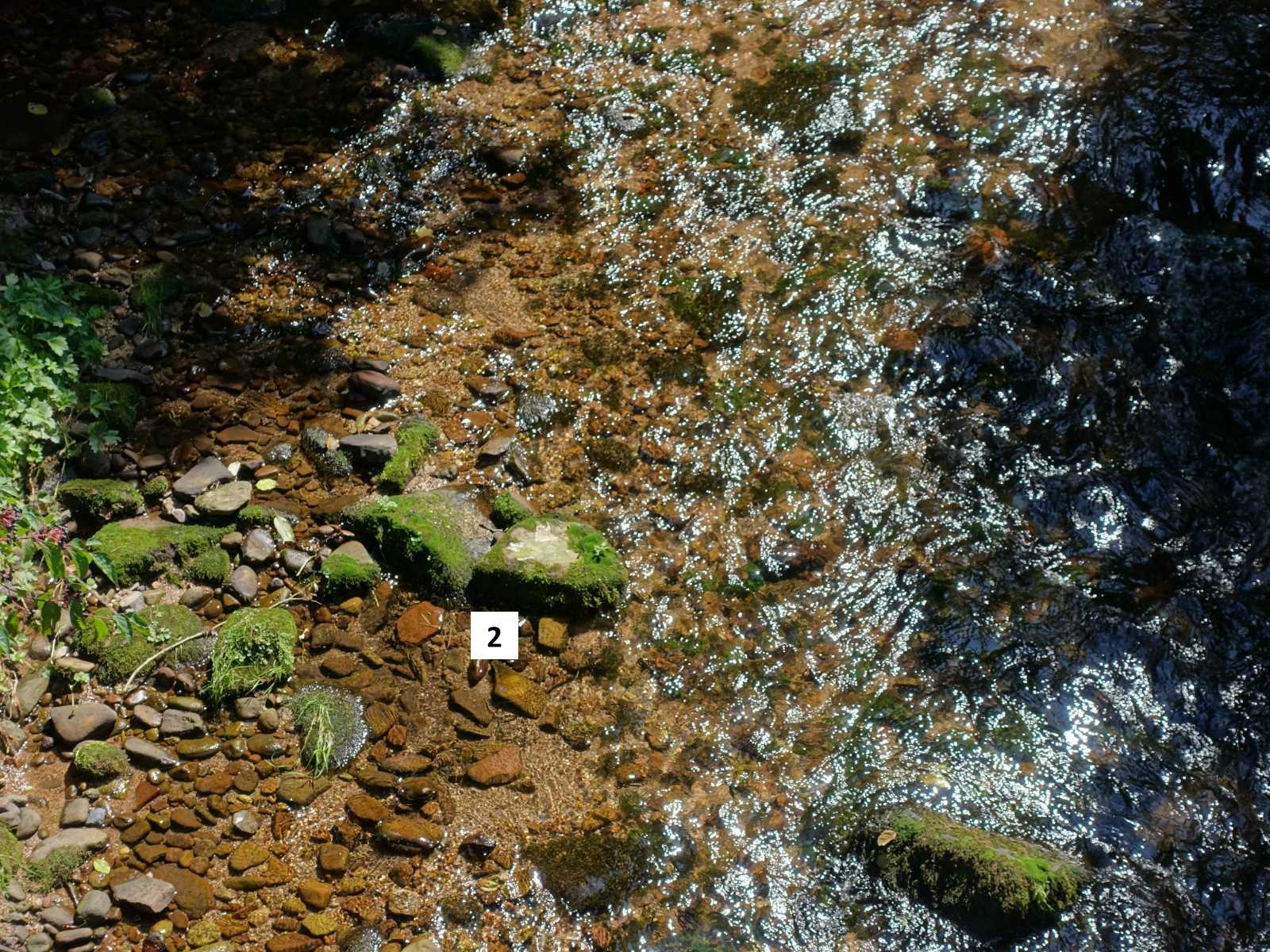
A view from the bridge over the Alb. What significance do the stones in the water 2 have for living creatures?
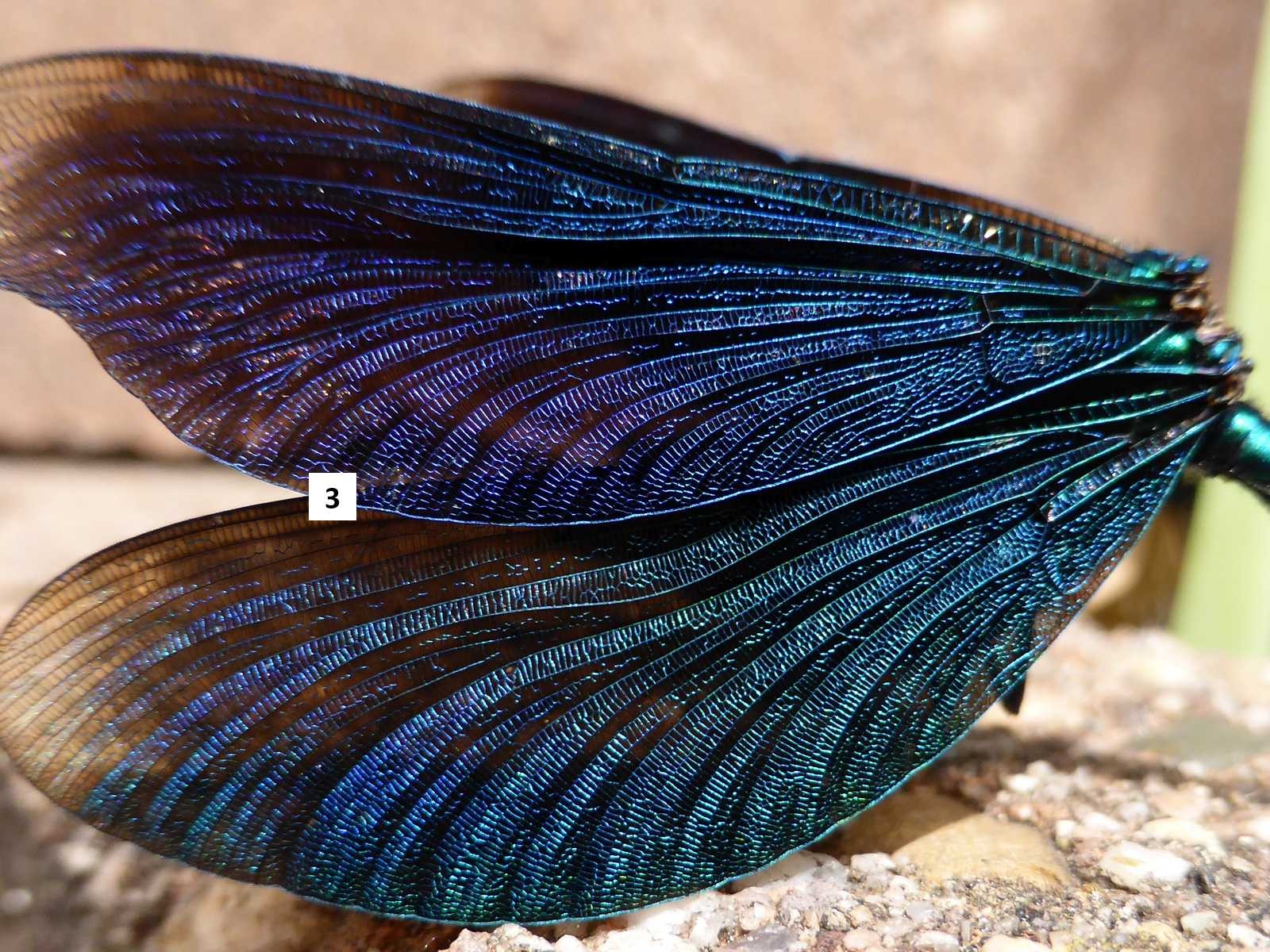
They provide shelter for many animal species, such as the larvae of the damselflies that fly here in summer. The wings of the male blue-winged damselfly 3 (Calopteryx virgo) are a true work of art. Where it flies, the streams are natural and clean.
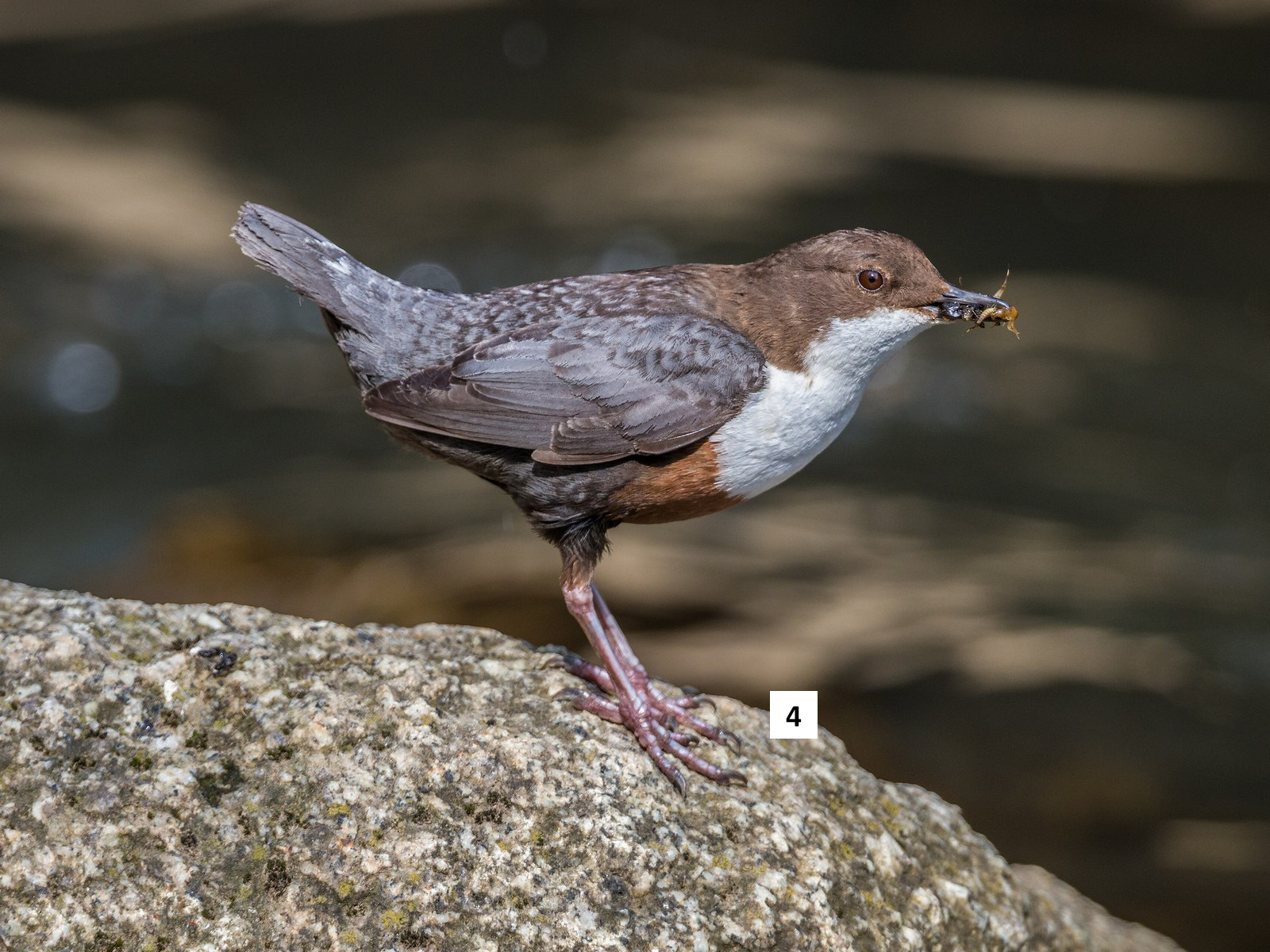
Stones covered in white bird droppings (2) above the water level are resting places for dippers (4) (Cinclus cinclus) and grey wagtails (Motacilla cinerea). The kingfisher (Alcedo atthis) also visits here from time to time!
Why does the Alb make a detour at Frauenalb and is almost pushed to the other side of the valley? And what does this have to do with the location of the monastery complex?
The small incline of the road to the left of the "König von Preußen" inn also proves this: Frauenalb Monastery was built on an alluvial cone. This alluvial cone was created by the washing away of soaked soil with stones in the small valley above the monastery after heavy rainfall. The resulting "soil slurry" flowed downhill and over time pushed the course of the Alb away from this side of the valley. This caused the river to form a double bend at this point.
Many Black Forest villages, such as Frauenalb Monastery here, were built on such alluvial cones, as these usually represent a flood-safe location. Herrenalb Monastery (alluvial cone of the Gaisbach) is another example of this. However, there is also a geo-hazard in the case of Frauenalb (Station 3).
Continue along the hiking trail in the direction of "Frauenalb Monastery". Opposite the "König von Preußen" inn, turn left onto a small path to the monastery gate.
The inside of the monastery ruins is not accessible due to the risk of falling rocks. Follow the road uphill past the monastery ruins to the western main entrance.
Alb bridge and Nepomuk statue
Who will discover the bridge over the Alb and who will find the Nepomuk statue?
Please accept cookies on this page to use the map feature.
Loading...
No locations found for this filter combination!
Scan the code to view this page on your smartphone or tablet.
We use cookies to provide you with the best possible browsing experience. Please note that when you accept only essential cookies, some of the website features may be unavailable or limited. You can find more information in our Privacy policy.